Designing homes with sustainability at the forefront is no longer a niche aspiration but a mainstream necessity. At Sustainaspace, we’ve seen how thoughtful material choices shape not just the environmental footprint of a build, but also the long-term efficiency, comfort, and cost-effectiveness of living spaces. Among the biggest levers available in achieving an energy-efficient home are the structural materials—concrete, timber, and steel. These essentials carry both high environmental costs and high potential for positive change when selected with care.
In this guide, we explore how the right concrete, timber, and steel solutions can earn valuable material credits, reduce embodied carbon, and set the foundation for truly future-ready homes.
Understanding Material Credits in Green Home Design
Material credits are recognition points awarded in green rating systems for choosing environmentally preferable building materials. They account for both the embodied carbon (emissions associated with production, transport, and installation) and the life-cycle performance of a product.
The construction sector is responsible for nearly 39% of global carbon emissions, and much of this comes from the materials themselves. Low-carbon alternatives and sourcing strategies can offset a significant portion of this footprint, which is why material credits play such a decisive role in projects aiming for higher sustainability ratings.
These credits do not work in isolation. Just as water efficiency contributes to the broader picture of environmental performance, the material palette of a project influences operational energy needs, thermal comfort, and resilience. In the same way smart metering transforms household water management, material selection is the hidden lever for long-term carbon efficiency.
Low-carbon Concrete: Rethinking a Heavyweight
Concrete is the most widely used building material in the world, yet it accounts for around 8% of global CO₂ emissions due to its cement content. Innovations in low-carbon concrete now allow us to balance its structural benefits with a significantly reduced footprint.
One strategy is substituting a portion of traditional Portland cement with supplementary cementitious materials (SCMs) such as fly ash, slag, or silica fume. These industrial by-products not only reduce cement demand but also enhance concrete’s durability.
Another approach is the use of geopolymer concrete, which replaces cement entirely with aluminosilicate materials. This emerging technology has the potential to cut emissions by up to 80%. Locally sourced aggregates and recycled content also add to the credits available under green rating systems.
The performance of low-carbon concrete aligns with the thermal mass benefits critical in energy-efficient design. By absorbing and slowly releasing heat, it helps moderate indoor temperatures and reduces reliance on mechanical heating or cooling. Much like the way rainwater harvesting eases reliance on mains supply, concrete with alternative binders lessens dependence on high-emission cement.
Timber: Renewable Strength and Warmth
Timber stands apart from other structural materials because of its ability to store carbon during its growth cycle. When responsibly harvested from certified forests, it becomes a renewable and low-carbon solution that continues sequestering carbon long after installation.
Cross-laminated timber (CLT) and glue-laminated timber (glulam) are two engineered products transforming the way timber is used in residential design. These innovations offer the strength and fire resistance required for larger spans and multi-storey buildings, extending timber’s reach beyond traditional framing.
The warmth and aesthetic of timber also contribute to indoor environmental quality, which is increasingly recognised in sustainability rating systems. However, material credits hinge on more than aesthetics. Certification under systems such as FSC (Forest Stewardship Council) or PEFC (Programme for the Endorsement of Forest Certification) ensures sourcing does not contribute to deforestation, further strengthening its environmental profile.
As with water reuse technologies, the sustainability of timber lies not just in availability but in closed-loop thinking—using renewable cycles to maintain balance. Just as recycled greywater supports sustainable living, responsibly sourced timber provides both performance and preservation.
Steel: Durable, Recyclable, and Evolving
Steel remains indispensable in modern home design due to its structural strength, versatility, and long lifespan. While its production is energy-intensive, steel earns material credits through its recyclability. In fact, steel is one of the most recycled materials globally, and using recycled content can slash embodied carbon dramatically.
The push for greener steel has also led to advancements such as electric arc furnace (EAF) production, which uses scrap steel and renewable energy instead of coal-fired blast furnaces. These processes can reduce emissions by more than 50%, making steel a viable choice for low-carbon projects.
Steel’s precision and durability reduce waste during construction and minimise maintenance over a building’s life cycle. Its adaptability also allows for disassembly and reuse—important features in the shift towards circular economy principles.
When combined with other low-carbon materials, steel completes a balanced structural palette that maximises both sustainability credits and design flexibility.
Integrating Materials into an Energy-efficient Strategy
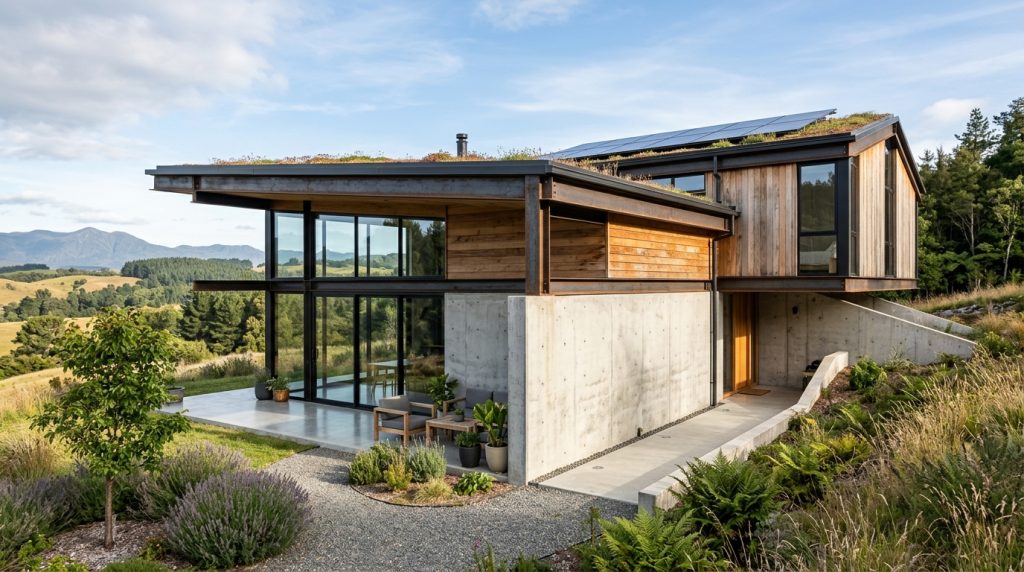
While concrete, timber, and steel are often seen as competing options, the most sustainable homes use them in combination. For example, timber framing with steel connections, low-carbon concrete slabs, and recycled steel roofing can work together to balance performance with environmental responsibility.
Achieving material credits is not simply about substitution—it’s about integration. Each material offers unique thermal, structural, and aesthetic qualities that can be optimised through careful design. The synergy of materials supports broader ESD strategies, ensuring homes are not only energy-efficient in operation but also carbon-responsible in construction.
As design tools and rating systems evolve, transparency in environmental product declarations (EPDs) is becoming critical. These documents provide verified data on the environmental impact of materials, enabling architects, engineers, and builders to make informed decisions.
Building Homes That Last Beyond Generations
Material selection defines more than a home’s structure—it defines its legacy. By choosing low-carbon concrete, responsibly sourced timber, and recyclable steel, we create homes that carry less environmental burden and more resilience into the future.
At Sustainaspace, we see materials not just as building blocks but as commitments. Every slab, beam, and frame carries weight not only structurally but environmentally. That’s why our approach to home design focuses on material credits that align with both regulatory requirements and deeper sustainability values.
Sustainability is about balance—between strength and renewability, tradition and innovation, cost and long-term value. By placing materials at the heart of energy-efficient design, we’re building more than homes—we’re building trust with the environment, ensuring that what stands today will support the generations that follow.