Building or renovating in New South Wales requires more than just a vision for design and comfort — it also demands compliance with strict sustainability measures. The Building Sustainability Index (BASIX) plays a central role in ensuring new homes and significant renovations are energy and water efficient, contributing to reduced environmental impact and long-term cost savings for households.
At Sustainaspace, we specialise in supporting homeowners, builders, and designers to meet these standards with precision and efficiency. By understanding the ins and outs of BASIX certificates, from costs and turnaround times to the required documentation, we make the compliance process seamless while helping create homes that are both sustainable and practical.
Understanding BASIX and Its Role in Sustainable Homes
BASIX, introduced by the NSW Government, is a mandatory planning requirement for all new residential developments and certain renovations. Its primary aim is to reduce greenhouse gas emissions and water consumption across the state. Every BASIX assessment measures proposed designs against three key targets: water efficiency, energy efficiency, and thermal comfort.
To meet these requirements, homeowners and developers must obtain a BASIX certificate during the development application process. This document proves that the project complies with sustainability targets, and without it, approval cannot proceed.
For projects involving extensions or modifications, BASIX requirements can vary significantly, and understanding triggers and exemptions becomes critical. This ensures that even partial renovations maintain environmental performance while aligning with planning standards.
BASIX Costs: What You Should Expect
BASIX Costs: What You Should Expect
The cost of a BASIX certificate is determined by the NSW Government and varies depending on the size and type of project. A small-scale renovation will generally fall into a lower fee bracket, while multi-dwelling developments attract higher charges due to their complexity and scale. These fees are fixed and must be paid when lodging the certificate application.
In addition to the government fee, there are professional consultancy costs that homeowners or developers should consider. These relate to the preparation and lodgement of the BASIX assessment, where consultants review building plans, specifications, and system selections to ensure compliance. Although these costs are separate from the certificate fee itself, they play an important role in helping avoid design issues, delays, or resubmissions, ultimately keeping the project on track and within regulatory requirements.
Turnaround Times: How Long Does BASIX Take?
One of the most common questions homeowners and builders have is: how long does it take to secure a BASIX certificate? In most cases, the timeframe is relatively short once all necessary information is ready.
- Online BASIX tool: Certificates can often be generated almost instantly if all input data is accurate and complete.
- Consultant-prepared assessments: Projects that require professional input, particularly for more complex designs, may take several days to a week to finalise.
- Approval processes: While the BASIX certificate itself may be quick, it must be lodged as part of the broader development application, which will follow local council or certifier timelines.
Turnaround times can be delayed if documents are missing, calculations are inaccurate, or if the design fails to meet BASIX targets and requires modifications. Engaging professionals who are experienced with BASIX compliance often helps reduce such risks and ensures smooth progress toward approval.
Documents You Need for a BASIX Certificate
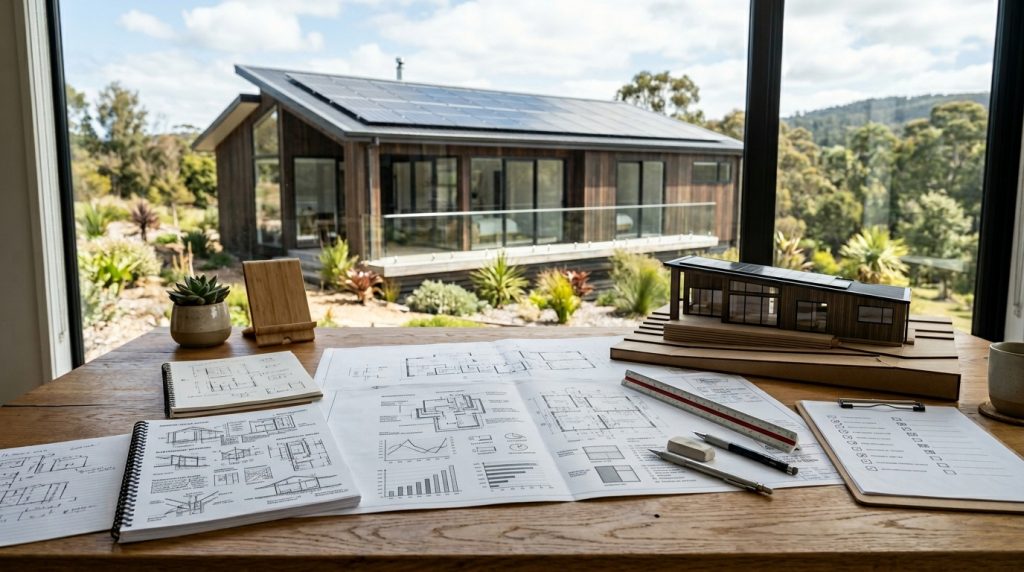
Preparing for a BASIX assessment requires accurate and detailed documentation. Without these, certificates cannot be generated or lodged. Commonly required documents include:
- Architectural plans: Floor layouts, elevations, and site plans are essential for calculating thermal comfort and energy performance.
- Specifications: Details on building materials, glazing, insulation, and shading devices must be provided.
- Fixture and appliance choices: Information on water fixtures, heating and cooling systems, and lighting is crucial for meeting sustainability targets.
- Site information: Orientation, shading, and climate zone data influence thermal performance outcomes.
For larger or more complex developments, additional documentation such as NatHERS (Nationwide House Energy Rating Scheme) reports may also be required. Whole-of-home modelling through NatHERS has become increasingly important in demonstrating compliance, particularly under updated BASIX requirements.
Practical Tips for Smooth BASIX Compliance
While BASIX is a technical requirement, approaching it strategically can make the process much smoother:
- Engage early: Involve sustainability consultants at the design stage rather than after plans are finalised. This prevents costly redesigns.
- Prioritise orientation: The placement of windows, living spaces, and shading devices can significantly impact thermal performance.
- Choose efficient systems: Energy-efficient heating, cooling, and water systems make it easier to meet BASIX targets without overcomplicating design.
- Stay informed: Regulations and performance benchmarks evolve over time. Keeping up to date ensures designs remain compliant and competitive in the property market.
These proactive steps not only save time and money but also lead to homes that are more comfortable, environmentally responsible, and future-proof.
Building for the Future with Confidence
BASIX is not simply a regulatory hurdle — it is an investment in a home’s long-term performance, cost efficiency, and environmental footprint. By understanding the costs, turnaround times, and documentation requirements, homeowners and builders can approach the process with confidence and clarity.
At Sustainaspace, we believe sustainable homes should be accessible and achievable for everyone. Our role is to simplify BASIX compliance while ensuring projects meet the highest standards of efficiency and comfort. With the right guidance, you can create spaces that are not only approved but are also healthier, more resilient, and aligned with a sustainable future for New South Wales.