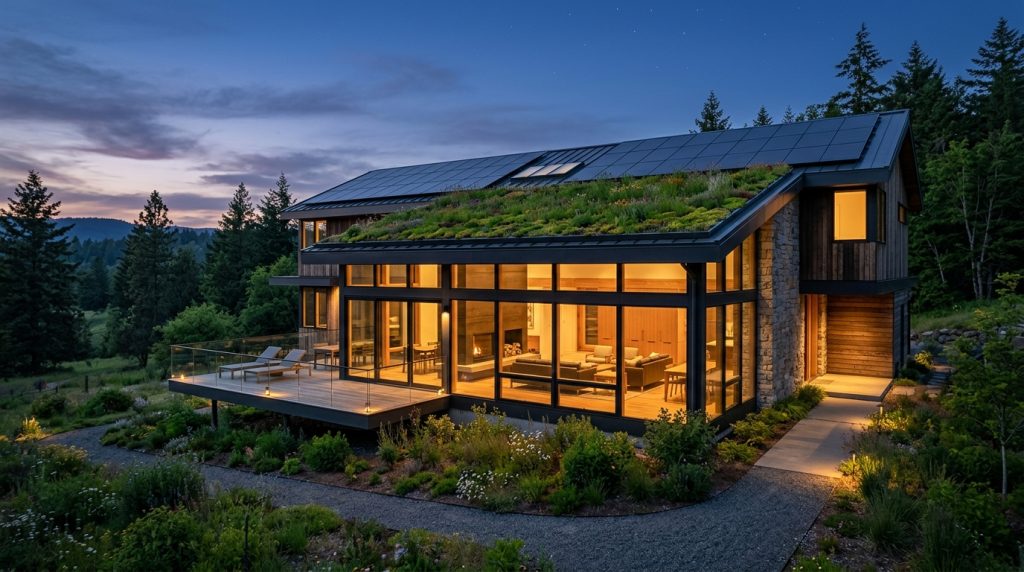
When designing energy-efficient homes, one of the most important opportunities lies at the concept stage. Early planning is where the greatest long-term benefits can be secured. From passive solar orientation to material selection and building envelope performance, an effective Environmentally Sustainable Design (ESD) strategy at concept design can lock in simple but powerful efficiency points that are far more difficult – and costly – to achieve later in the project lifecycle. At Sustainaspace, we have seen firsthand how decisions made in the earliest phases set the tone for compliance, cost savings, and comfort outcomes throughout the life of a building.
Why the Concept Design Stage Matters Most
Concept design is where big-picture decisions are made. At this point, the overall building footprint, orientation, site placement, and massing are determined – all of which play a direct role in operational energy use. For example, a home orientated to maximise northern exposure in Australia can significantly reduce reliance on mechanical heating in winter, while overhangs and shading devices can temper solar gains in summer.
It is much harder to retrofit these advantages later without major redesigns. By incorporating ESD strategies from the outset, projects naturally align with compliance requirements such as Section J of the NCC, BASIX, and Green Star pathways, while also positioning for strong thermal comfort outcomes and reduced lifecycle costs.
Passive Design as a Foundation
Passive design is the backbone of any effective ESD strategy at concept design. It focuses on working with natural site conditions to optimise energy use and comfort. Key passive design elements include:
- Orientation: Positioning living areas to the north for natural heat gain in winter.
- Cross-ventilation: Placing openings to maximise natural airflow.
- Thermal mass: Using materials like concrete or brick strategically to store and release heat.
- Daylighting: Maximising natural light to reduce artificial lighting loads.
By embedding these strategies early, homes can avoid overreliance on HVAC systems, which are often the largest contributors to operational energy demand.
It is worth noting that operational energy continues to account for the largest share of emissions in residential buildings, although embodied carbon is emerging as a critical focus. Integrating both from the start ensures a balanced and future-proofed design.
Materials and Embodied Carbon
While operational energy savings are often front of mind, materials play an equally important role in the sustainability of a home. The embodied carbon of construction materials – the emissions created through extraction, manufacturing, and transport – can represent a significant portion of a building’s total environmental impact. At the concept stage, selecting low-carbon materials can drastically change a project’s footprint. Recycled or locally sourced timber can replace conventional imports, reducing both transport emissions and resource depletion. Lightweight framing systems that minimise cement content lower emissions while maintaining structural efficiency. High-performance glazing not only contributes to thermal comfort but also provides durability and long-term savings. Even choices like recycled steel or innovative cladding systems can add value, balancing sustainability with compliance. By considering these aspects early, designs are naturally better aligned with frameworks such as Green Star and BASIX, both of which award points for responsible material sourcing and efficiency.
Building Envelope Performance
The performance of the building envelope – the walls, floors, roof, and windows – is central to energy efficiency. At concept design, this is the best time to commit to insulation levels that are appropriate for the specific climate zone, while ensuring airtightness and minimising thermal bridging in construction details. Glazing choices are particularly critical, as double or even triple-glazed systems can be selected to achieve the right balance between solar heat gain coefficients (SHGC) and U-values, optimising thermal comfort year-round. These considerations directly affect compliance under NCC Section J and state-based schemes, while also offering tangible long-term benefits in reduced operational costs. When the envelope is well thought out early, it provides a solid foundation for all other ESD strategies to succeed, ensuring that the home remains both energy efficient and comfortable across its lifecycle.
Water, Landscaping, and Site Integration
Beyond energy, a holistic ESD strategy at concept design also includes water management and site planning. Features such as rainwater harvesting, drought-tolerant landscaping, and efficient irrigation systems not only save water but also enhance the sustainability rating of the project.
Positioning trees and vegetation strategically can contribute to passive shading, natural cooling, and stormwater management. These landscape choices are best integrated early when site planning is most flexible.
The Power of Early Certification Alignment
Design teams often face a challenge balancing compliance with practical buildability and budget. By referencing certification schemes early – such as BASIX in New South Wales, or broader pathways like Green Star – projects can lock in easy points without costly late-stage redesigns.
Strategically addressing these requirements from the outset ensures that simple wins, like passive orientation and envelope optimisation, contribute toward both operational energy targets and certification benchmarks. This reduces the compliance burden while maximising sustainability outcomes.
Shaping Homes That Last
An effective ESD strategy at concept design is not just about meeting today’s standards – it is about future-proofing homes for decades of performance. By embedding sustainability principles from the beginning, projects achieve higher comfort levels, reduced environmental impact, and stronger compliance results with minimal rework.
At Sustainaspace, we believe that energy-efficient homes begin with thoughtful early choices. By locking in easy points through passive design, low-carbon materials, envelope performance, and certification alignment, we help homeowners and developers create spaces that are cost-effective, resilient, and environmentally responsible for the long term.